Case study · Operations platform
Empowerment Avenue, 2023 to now
ea os
The operating system for a creator-led arts organization. One place where artists, writers, grants, sales, compliance and time finally talk to each other.
Overview
Empowerment Avenue pays incarcerated artists, writers and filmmakers fairly and gets their work into mainstream spaces. That mission runs on a lot of moving parts: artwork and sales, artist payouts, editorial pitches, grants, compliance deadlines and a website that has to stay current.
By 2026 those parts lived in separate spreadsheets, task boards and inboxes. An earlier engagement with an outside vendor had not produced a working system, so in July I took it in-house and led the design and build of EA OS. The goal: one system that matches how the team actually works, and that the whole organization could trust.
The problem
A small team was doing coordination work by hand. Information existed, but it was scattered, and nobody could see the whole picture without asking around.
- Artist and artwork records spread across files
- Sales, payouts and follow-ups tracked in separate tools
- Writer and story data kept in spreadsheets
- Deadlines tracked across calendars and email
- No shared view of where staff time goes
- One record for every artist and artwork, synced to the website
- Sales and artist payouts handled in one workflow
- Stories, pitches and writers in a clean relational model
- A compliance calendar with owners and due dates
- Timesheets and reports that show capacity by program
Approach
I started from the people, not the software. I translated staff needs and existing spreadsheet processes into requirements, then built role-specific interfaces, intake flows and reports around them, testing with the team as we went.
Dashboard
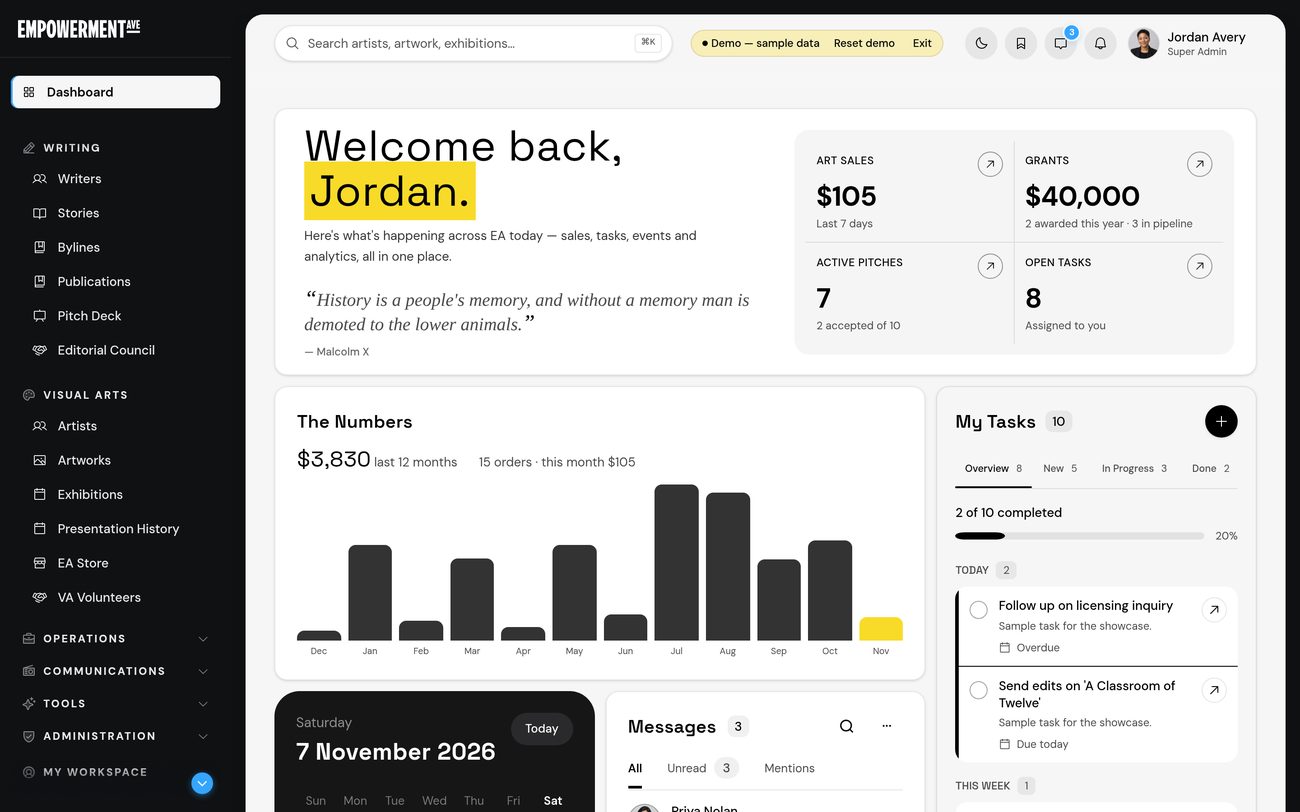
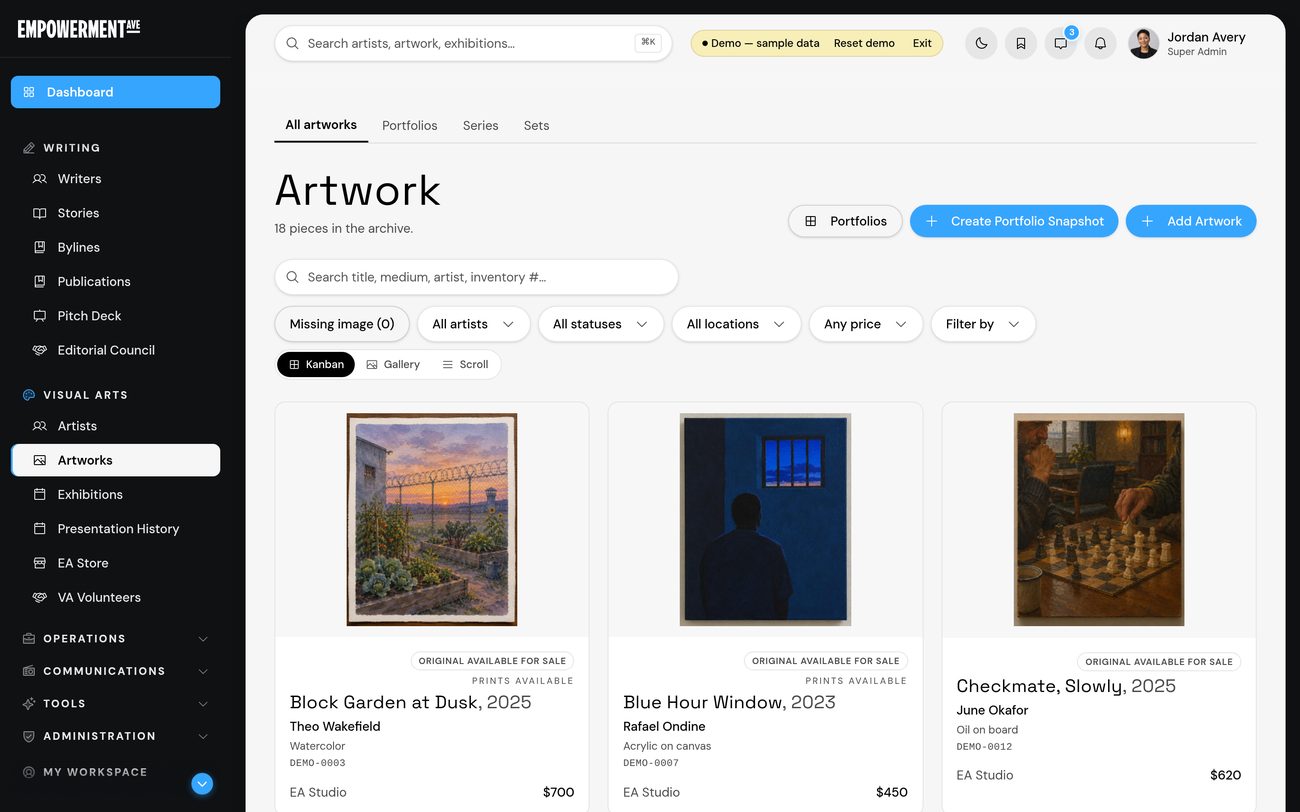
Artworks
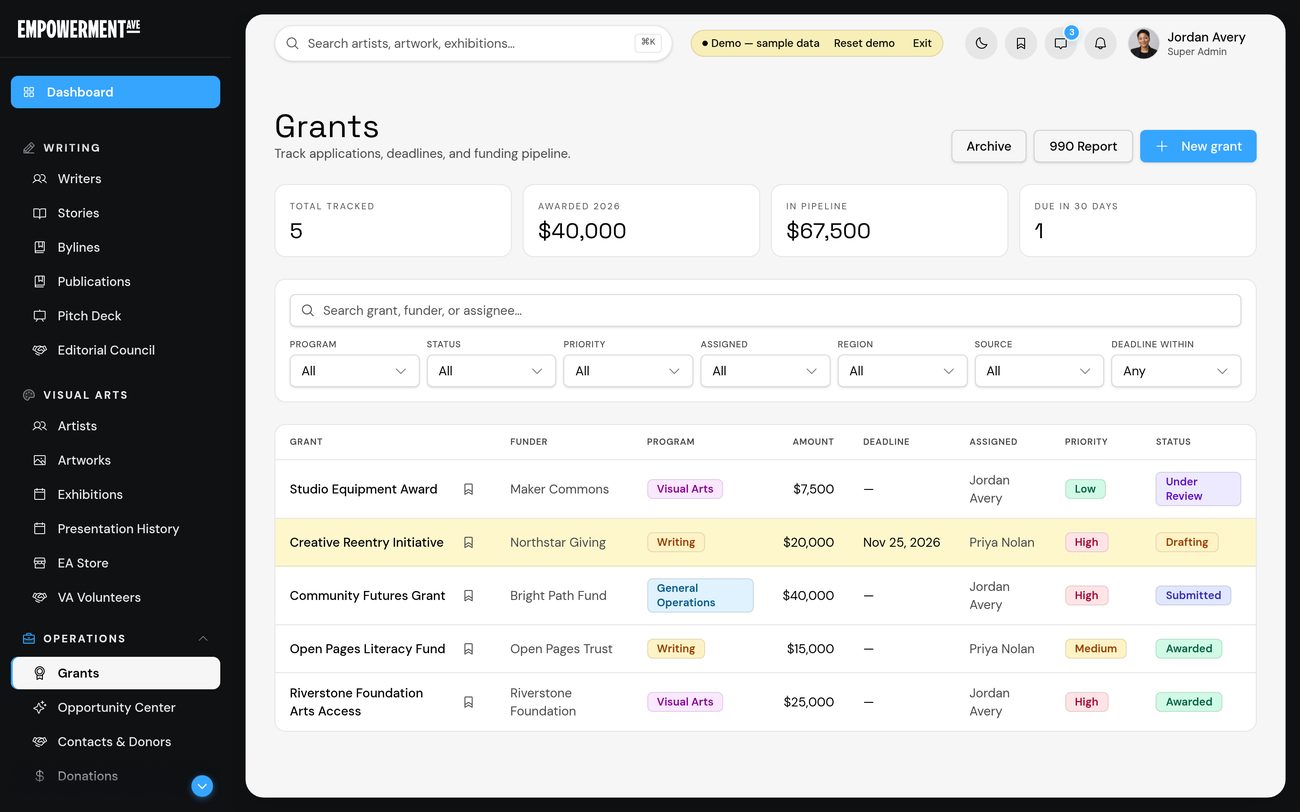
Grants
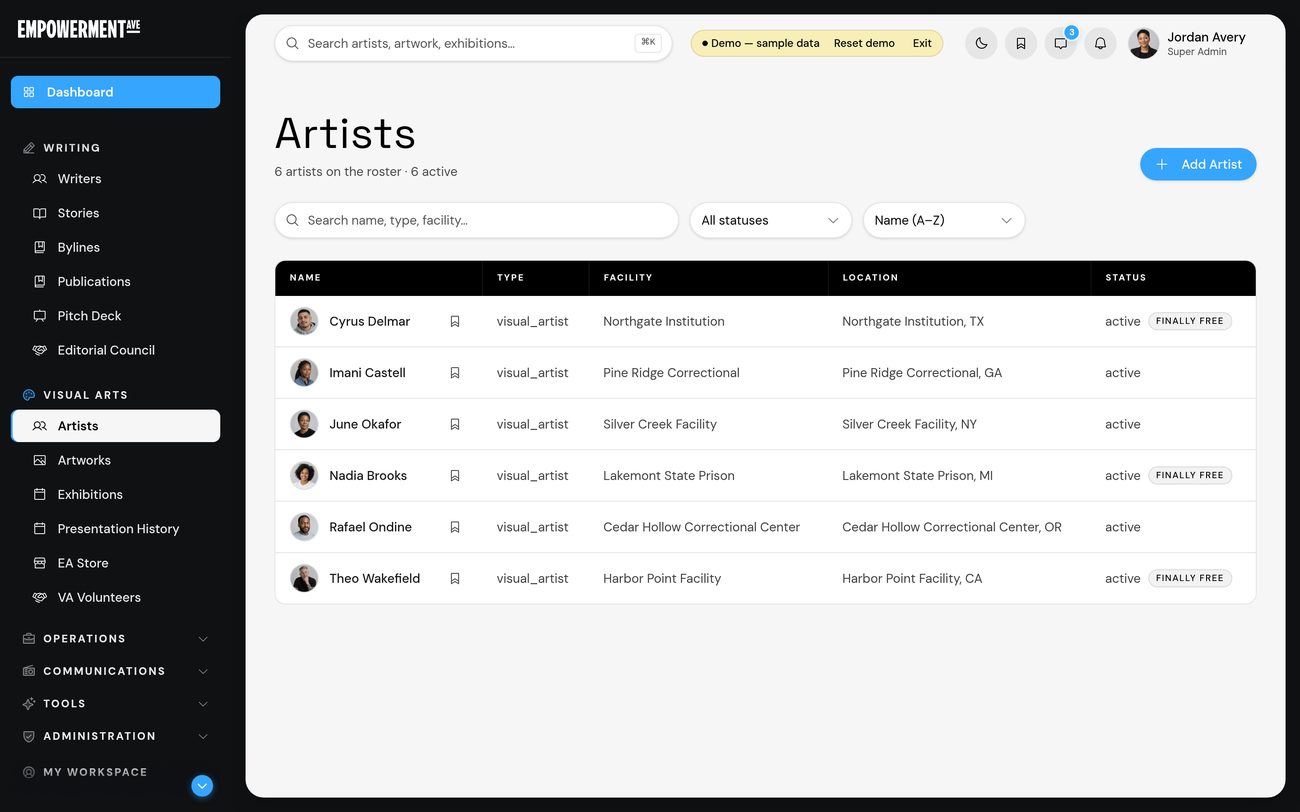
Artists
Writers
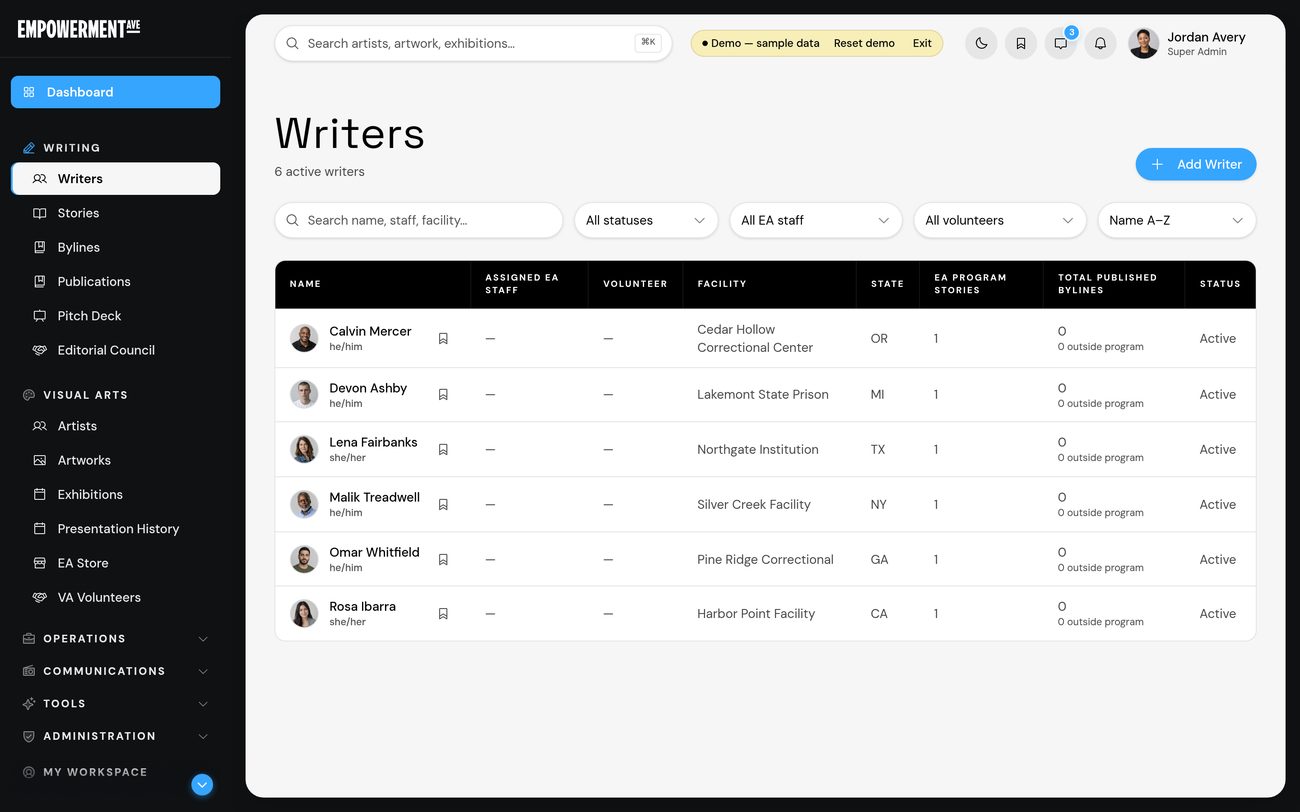
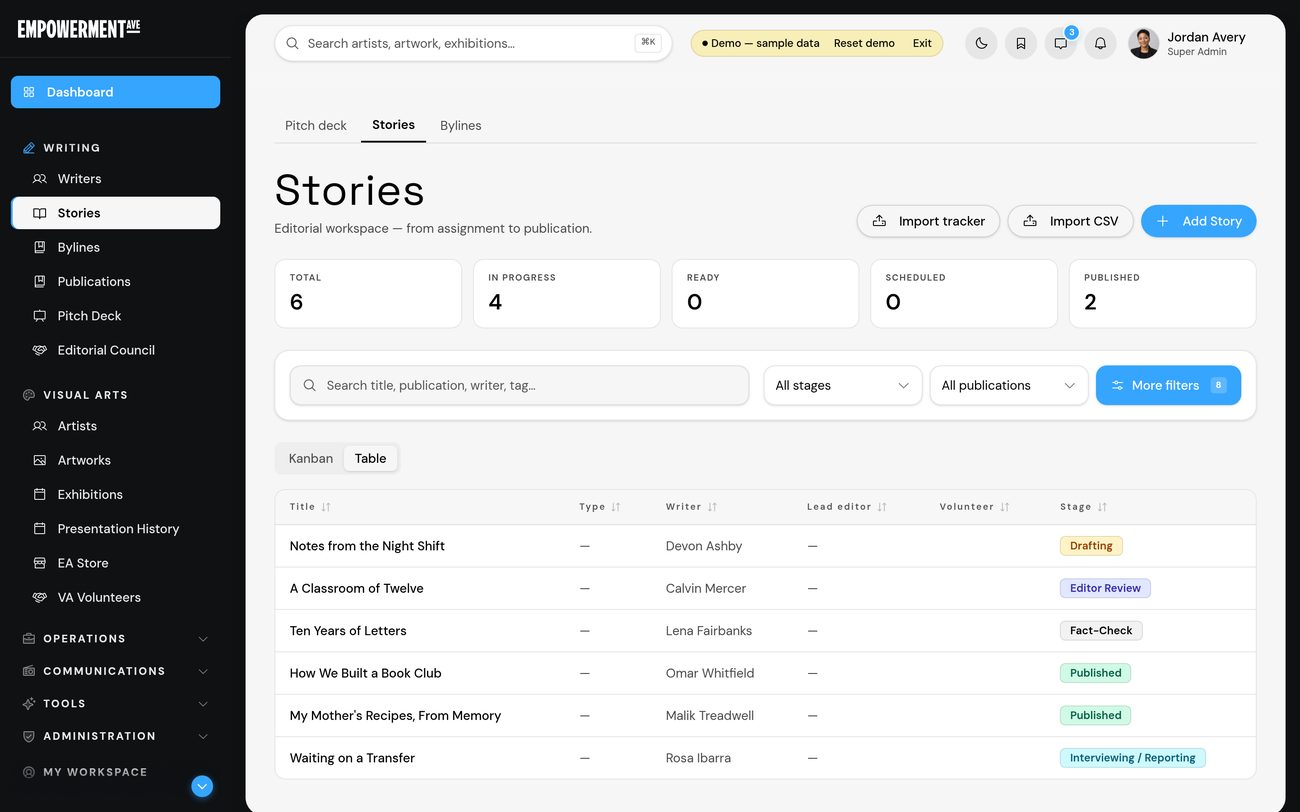
Stories
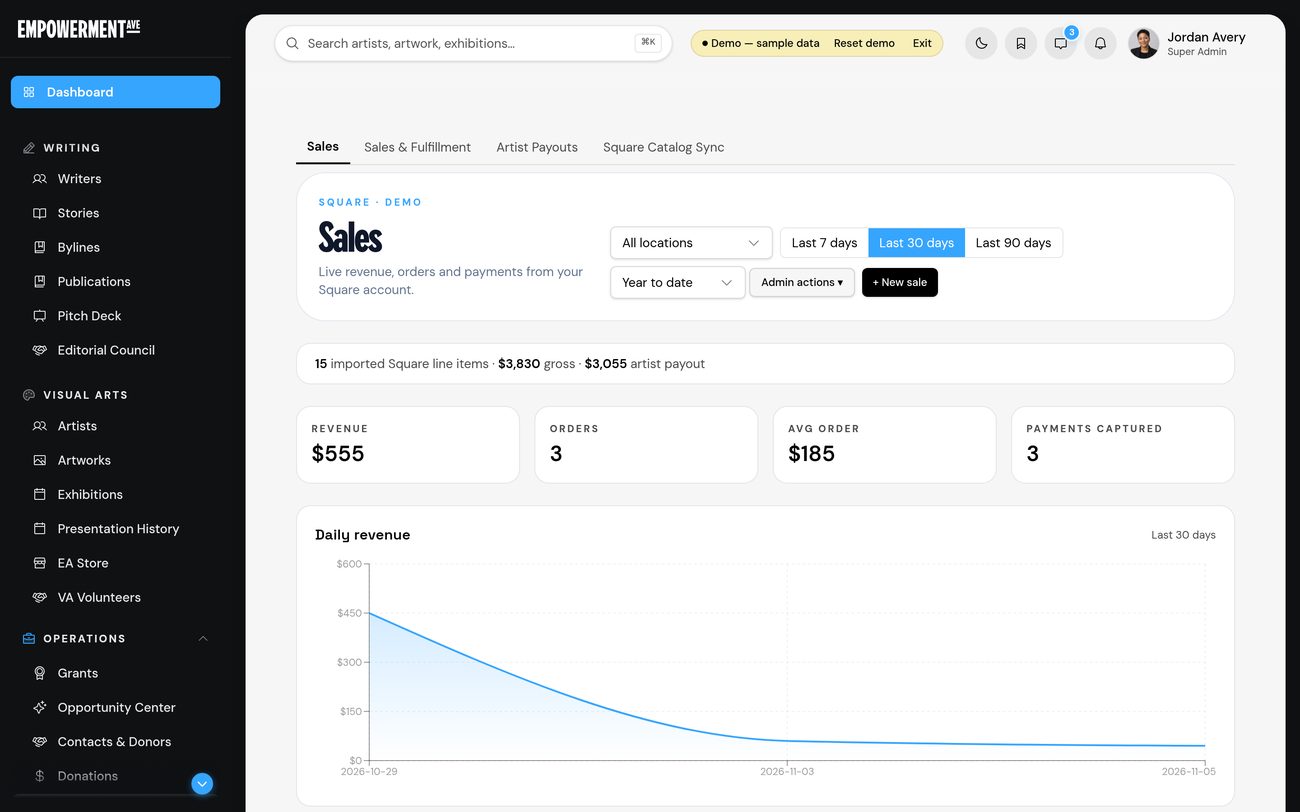
Sales
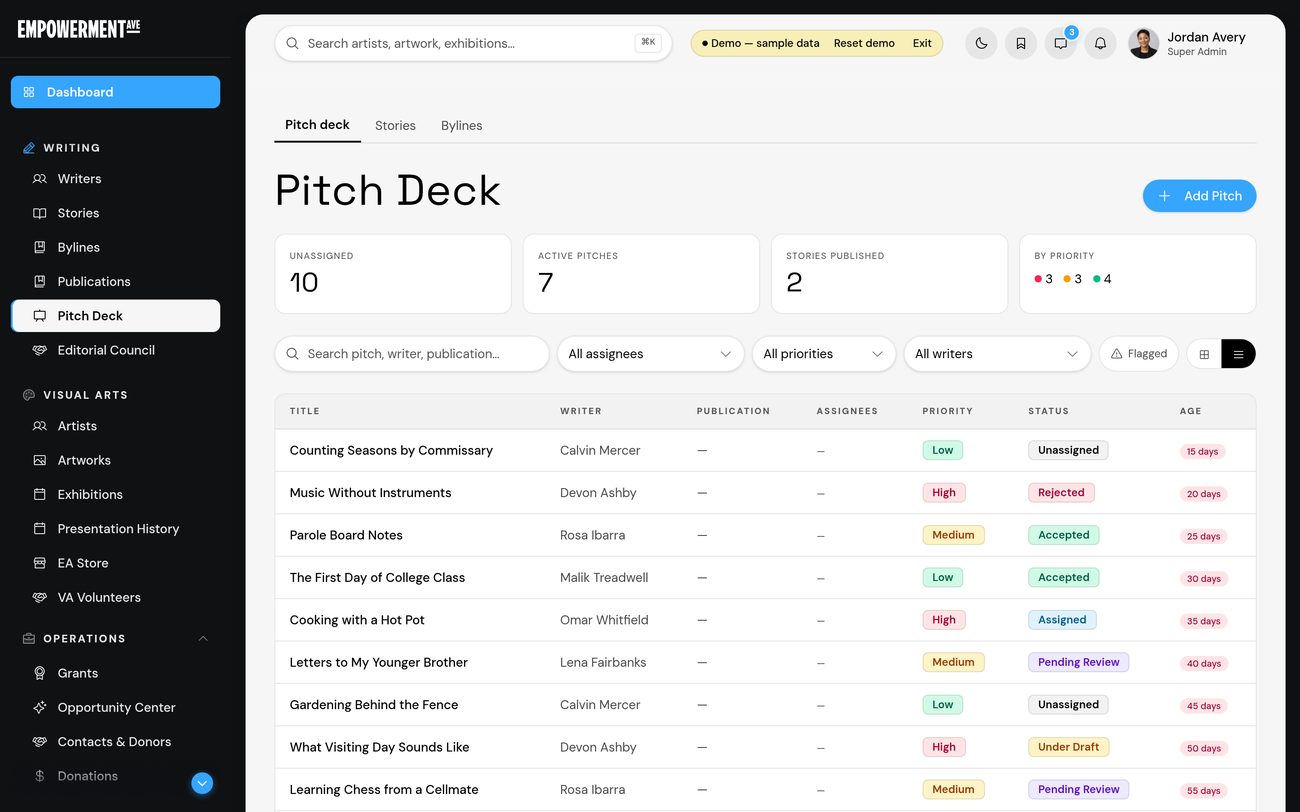
Pitch deck
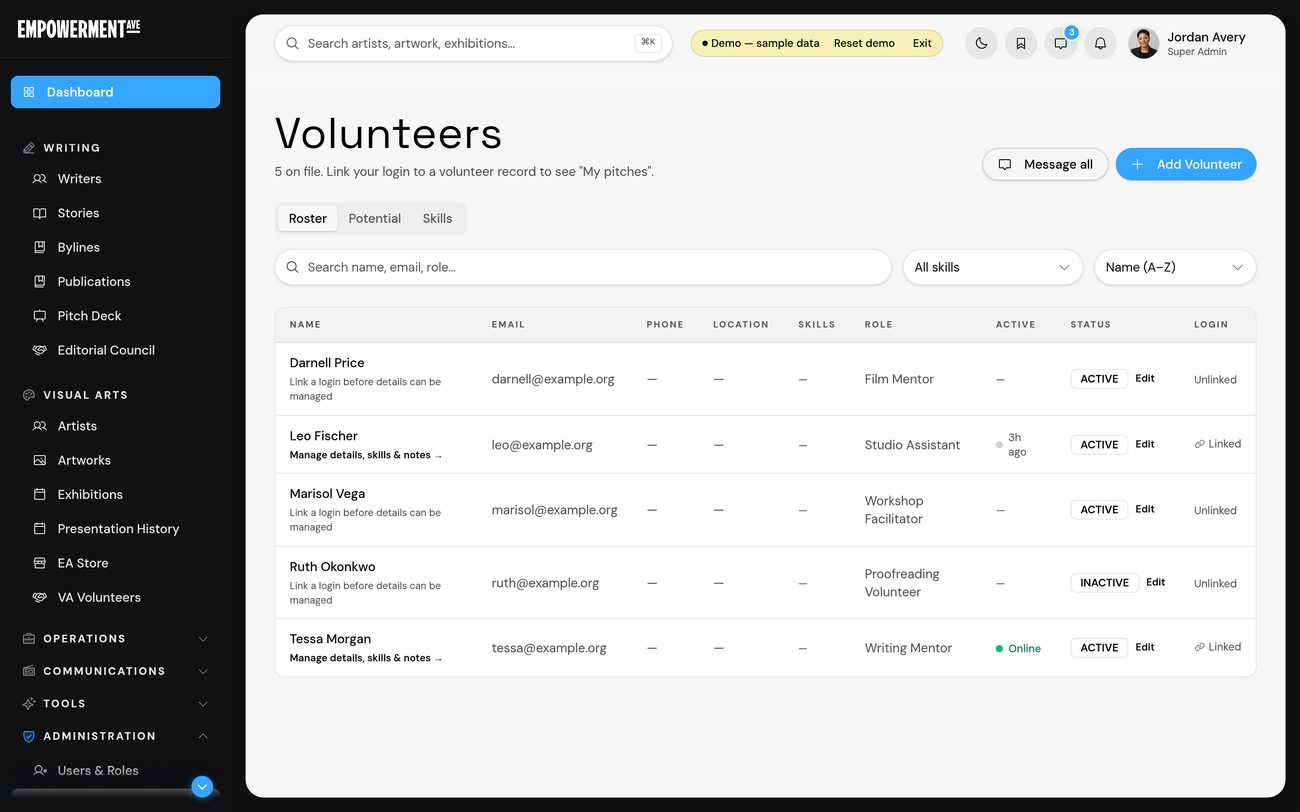
Volunteers
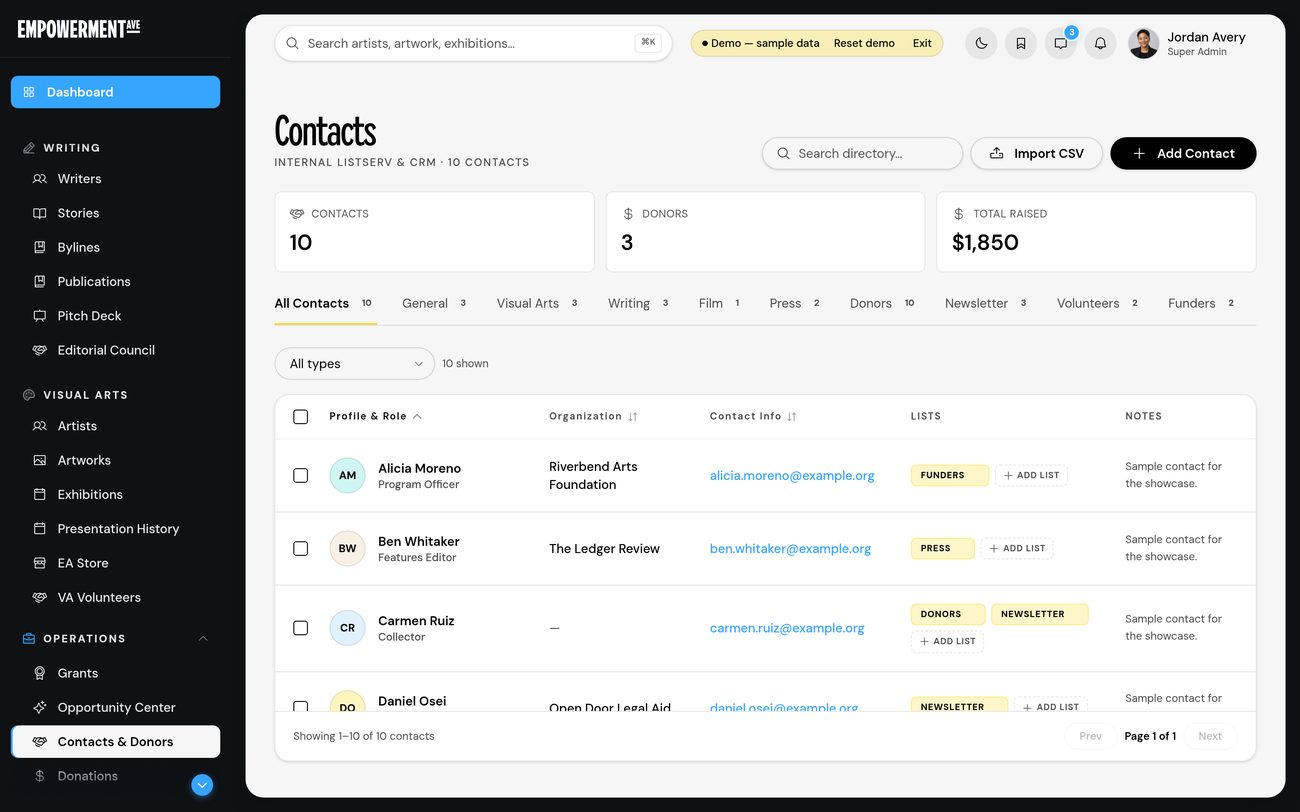
Contacts
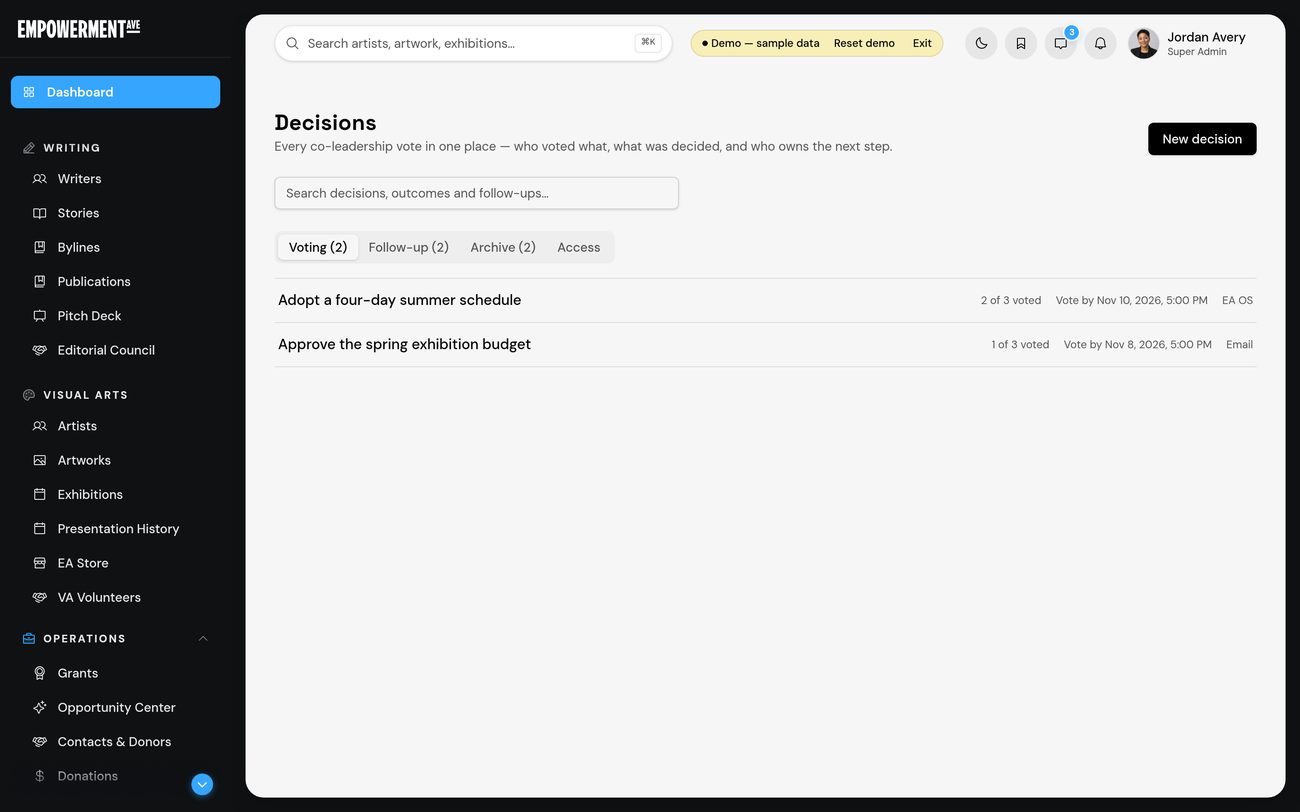
Decisions
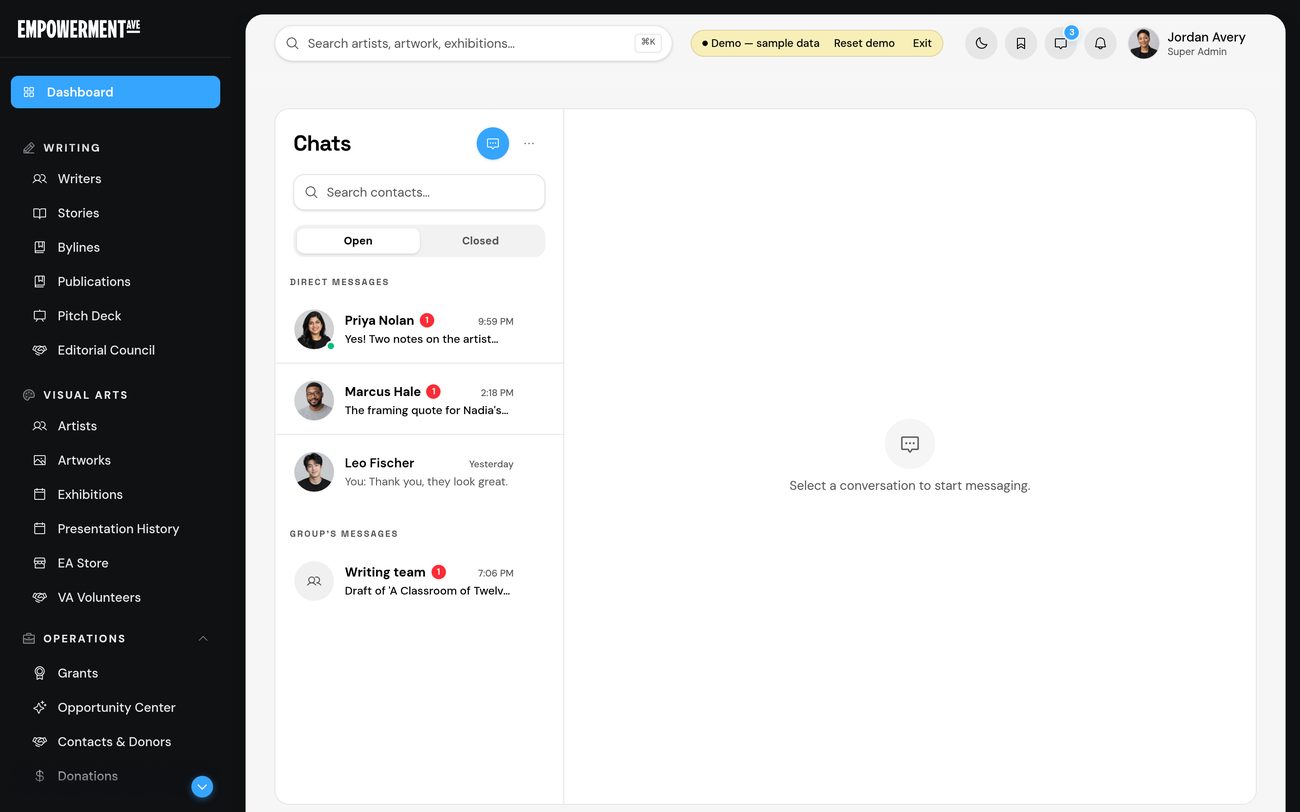
Messages
EA Monday Organizational Summary
Co-Leadership Team · Week of 2026-10-05 to 2026-10-11This Week at a Glance
A quiet week: one grant report filed, store sales up, and the pitch pipeline holding steady.
The team logged 118.5 of 140 expected hours (85%). Writing and Visual Arts took just over half the week; the rest went to operations and the Community Futures grant.
Action Items
- Dana to file the Riverbend Grant interim report before Friday. It is 9 days overdue.
- Omar to submit last week’s timesheet.
- Rae to confirm the board packet date for the Q4 meeting.
Team Meeting Recaps
All-hands check-in · Oct 5
- Reviewed Q4 priorities and the fall showcase timeline.
Action: Theo to circulate the run-of-show by Wednesday.
Writing breakout · Oct 6
- Two new pitches accepted; one story moved into fact-check.
Action: Lena to pair new volunteers with writers.
Notes:Sample meeting notes (illustrative only)
Compliance
Open requirements: 8 · Overdue: 1 · Due in next 30 days: 2 · Completed last week: 3
Overdue
- Riverbend Grant interim report (Grants), due 2026-09-30, High priority
Coming up (30 days)
- Annual state registration renewal (Legal), due 2026-11-12, in progress
- Volunteer background-check audit (HR), due 2026-11-28, not started
Grants
- Awarded this year: $52,000 across 3 grants
- In pipeline: 4 ($71,000 requested)
Art & Store Sales (pre-tax)
- Last week: $410 from 2 sales (+18% vs prior week)
- Last 30 days: $2,640 from 11 sales
Editorial & Pitches
- Active pitches: 14 · Accepted to date: 52 · New last week: 3
Website Traffic
- Visits: 1,126 (+9% vs prior week)
- Page views: 3,480 (+6% vs prior week)
Team Hours & Timesheets
Total hours: 118.5 of 140 expected (85%)
Approved: 3 · Pending review: 1 · Missing: 1
Where time went
- Writing: 41 hrs (35%)
- Visual Arts: 33.5 hrs (28%)
- Operations: 24 hrs (20%)
- Development: 12 hrs (10%)
- Film: 8 hrs (7%)
Observations
- Hours were 6% lower than the prior week, mostly from one incomplete timesheet.
- Visual Arts time rose ahead of the fall showcase install.
What it does
How it came together
- June 2026Research and data modelCompared tools and sketched a relational model for writers, stories, volunteers and tasks, with the principle of building small and keeping the option to grow.
- July 2026Build beginsAfter an earlier vendor engagement did not deliver, I rebuilt from the ground up. Started with the database and website integration, then expanded into artwork, sales and operations as the team’s needs came into focus.
- August 2026Testing with staffDirectors and operations reviewed real workflows and sent notes. Fixes covered status logic, portfolio and series structure, and document creation in shared drives.
- September 8, 2026Staff rolloutAfter review with the Board Chair, the whole team began using the database. A short guide introduced timesheets and why they matter.
- October 2026Weekly digest goes liveAutomated reporting began landing in leadership inboxes every Monday, with compliance, grants, sales, hours and meeting actions in one view.
- NowRefiningImage tooling for the collection, cleaner notifications, and preparing the next round of workflows.
Outcomes
- Someone records the sale
- Log in to the spreadsheet and pull the information from Webflow
- Get the email
- Log it in a separate manual spreadsheet
- Create the tasks by hand in Asana
- Someone records the sale
- The sale is logged automatically, with the store details already attached
- The tasks are created in Asana automatically
Artists are now paid within three days. Administrative backlog used to stretch that to weeks, and the manual logging cost hours every cycle.
Adopted by the whole teamStaff work from the same records and log time in the same place, after review with the Board Chair and a clear rollout.
Leadership sees the week without askingThe Monday digest gives the co-leadership team one consistent summary of hours, grants, compliance, sales and decisions.
Deadlines have ownersFilings and renewals live in a tracker with owners, priorities and due dates, so nothing quietly slips.
The website follows the dataArtwork and artist updates happen once and flow to the public site.
My role
I owned the project end to end: strategy, requirements, data model, interface design, build, testing, documentation and rollout. I worked day to day with the executive director, the operations lead and the directors of Writing and Visual Arts, and presented the proposal to the Board Chair for approval.
What I would carry into any organization: listen to the spreadsheets, build the smallest useful version, and make the data trustworthy before making it clever.